How to Run Multiple Claude Code Agents in Parallel: Paweł Huryn's Flight Deck Method
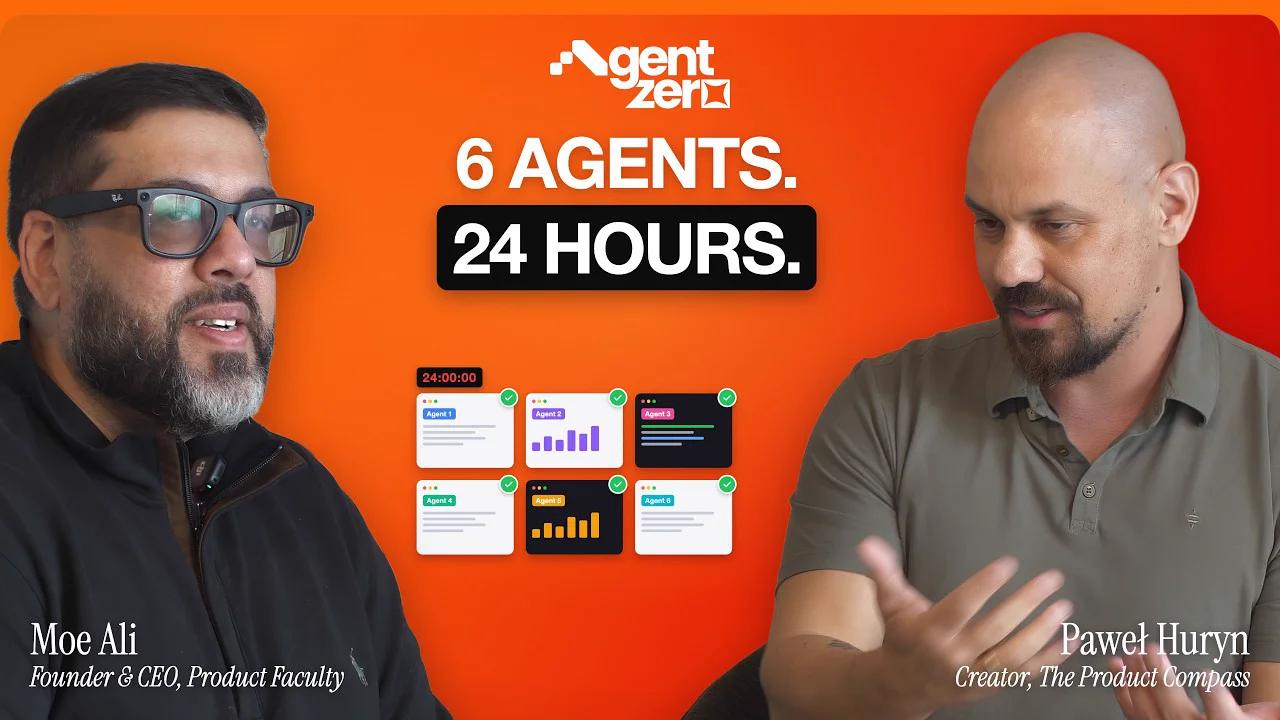
Paweł Huryn runs five to six Claude agents in parallel, and they often work 12 to 24 hours or more without him answering anything. He shares how he hands off the work, the "flight deck" that replaced reading long chats, and when to stop prototyping and ship something real.
The episode in numbers
You don't need the terminal anymore
You no longer need the terminal or an IDE to use Claude Code. In the Claude desktop app's Code tab, you can now do everything you could do in the terminal or VS Code, so non-technical builders can work with coding agents directly.
For months, Paweł recommended VS Code as the best option for non-technical people. Recent features in the Claude desktop app changed his mind. Things that weren't possible there before now are: you can view files, manage changes, track what has changed in your project, and install skills and connectors locally, just for the project you're working on rather than your whole account.
The one catch: use the Code tab, not the chat. "No IDE, no terminal is required."
How to run five to six agents at once
Working with so many agents was hard for Paweł for a long time. What changed was how he delegates. He no longer scopes work by spelling out exactly what to do and making every decision himself.
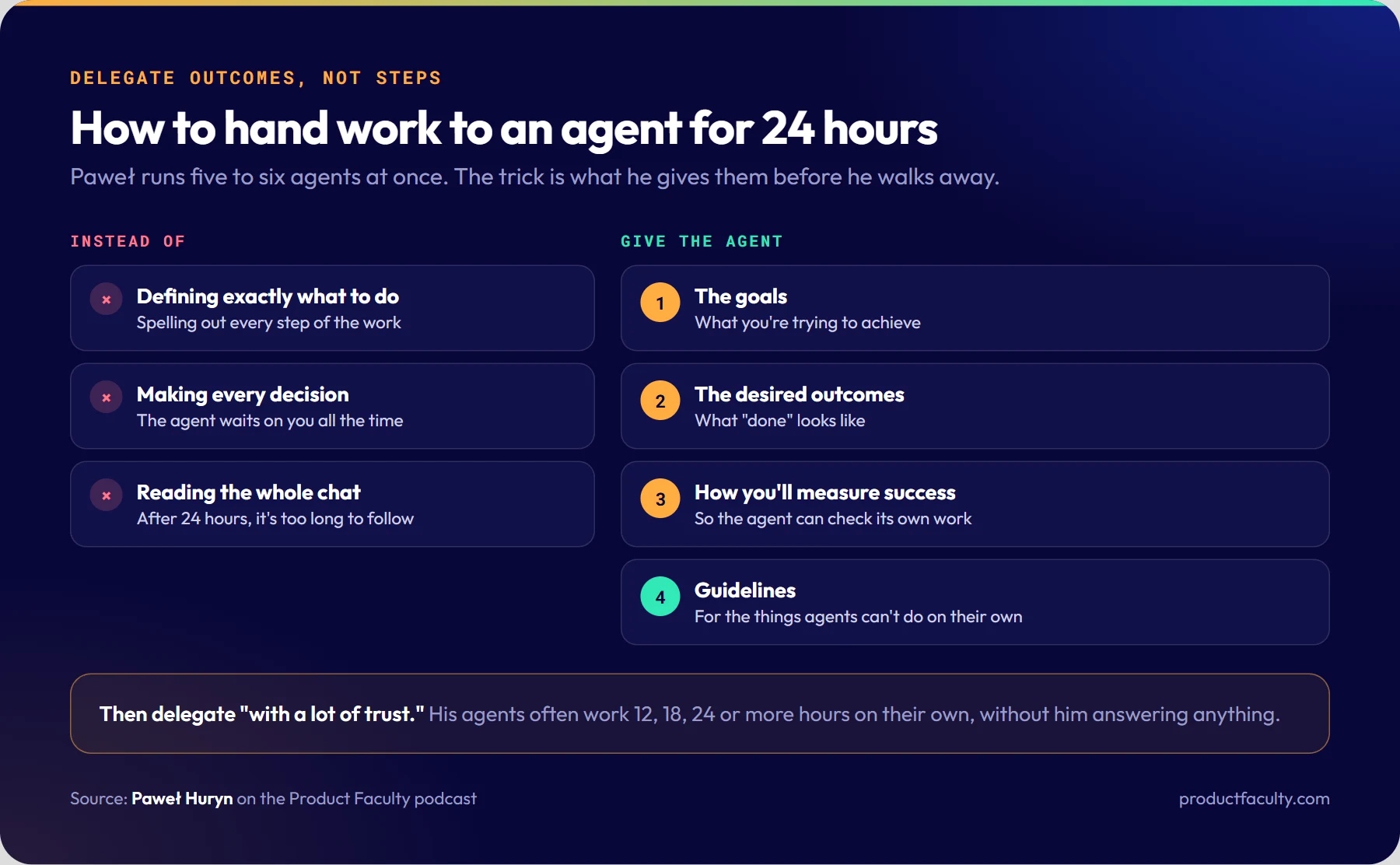
Instead, he explains to the agents what the goals are, what the desired outcomes are and how he will measure success. Then he hands over the work "with a lot of trust," plus some guidelines for the things agents can't do themselves. With that, his agents often run for 12, 18, 24 or more hours without him answering anything.
The flight deck: stop reading chats
Long runs created a new problem. Open a chat after 24 hours, and there are endless questions, suggestions and open decisions to read just to work out where things stand. So Paweł stopped reading the chats.
"I stopped reading those chats, and instead, I call it flight deck."
Paweł Huryn
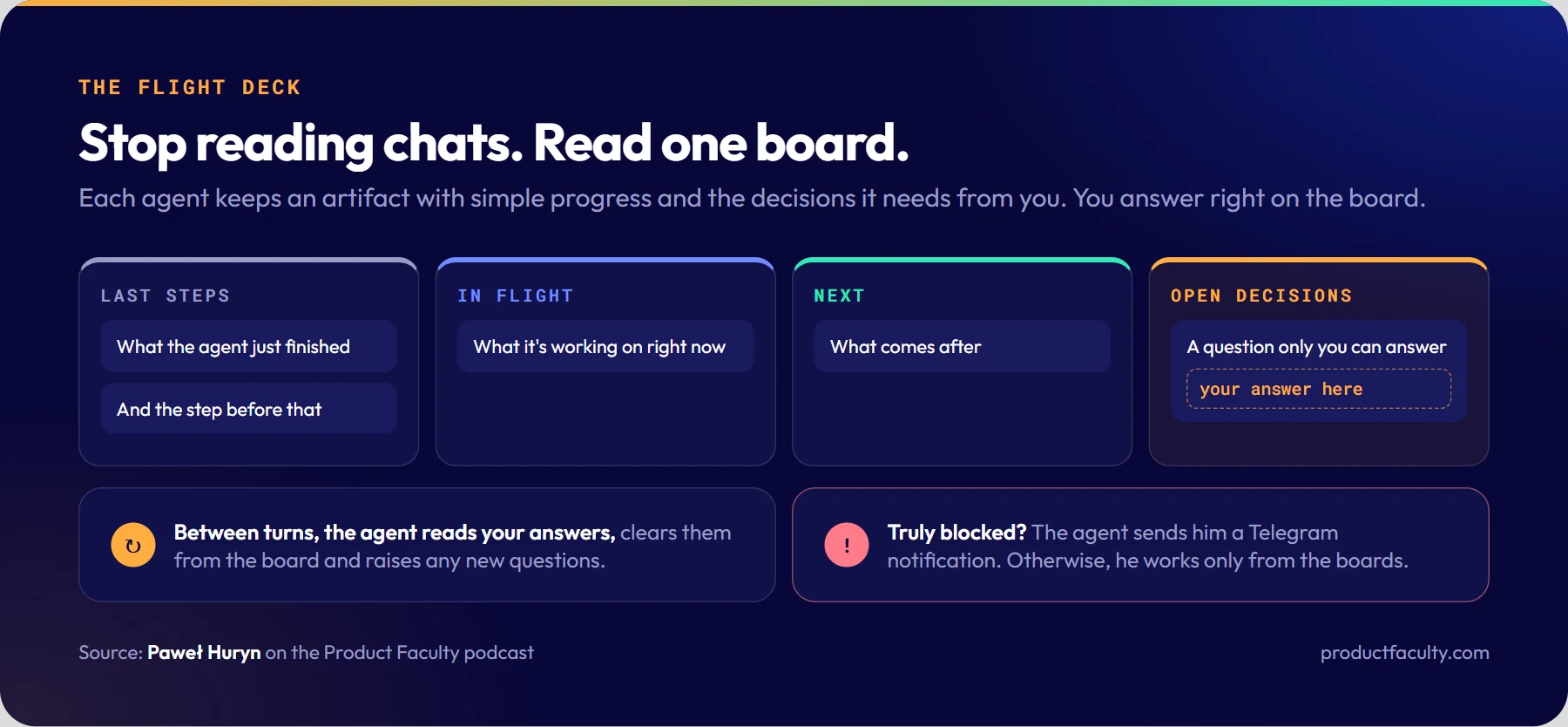
His agents create artifacts with simplified progress: the last steps, what's in flight, what's next, and the open decisions for him. He makes those decisions directly in the artifact, because artifacts now let you write in them. Between turns, the agent reads his decisions, removes them from the board and raises new questions.
Does he give feedback during the run? Only when needed. If something is blocking an agent, it sends him a Telegram notification. Other than that, he works from the artifacts, not the chat window.
Are artifacts replacing prototypes?
Moe asked whether artifacts are now replacing prototypes. Paweł's answer: not quite. Artifacts are great for quickly understanding what you're trying to achieve, reviewing what the agent found, and sharing with your team to build alignment. But they can't be instrumented.
| Feature | Artifact | Deployed product |
|---|---|---|
| Best for | Understanding the goal and reviewing what the agent found | Learning how real users behave |
| Who sees it | You and your team, to build alignment | Your users |
| Data | Can't be instrumented | Collects data on how people use it |
| What you learn | Whether you agree on the idea | Can users reach the goal? Do they understand what a button is for? |
Because building with agents is so fast, Paweł's advice is simple: "I would just build the thing, deploy, and check how people interact with it." As Moe put it, you just build a product, and that's your prototype.
The content system behind 135K followers
Paweł uses Claude most for two things: his content system, and building and shipping products. The content system pulls signals from Reddit, LinkedIn and a list of X accounts he monitors. Reddit, he says, helps surface what people are getting interested in, and new topics that haven't come up elsewhere yet.
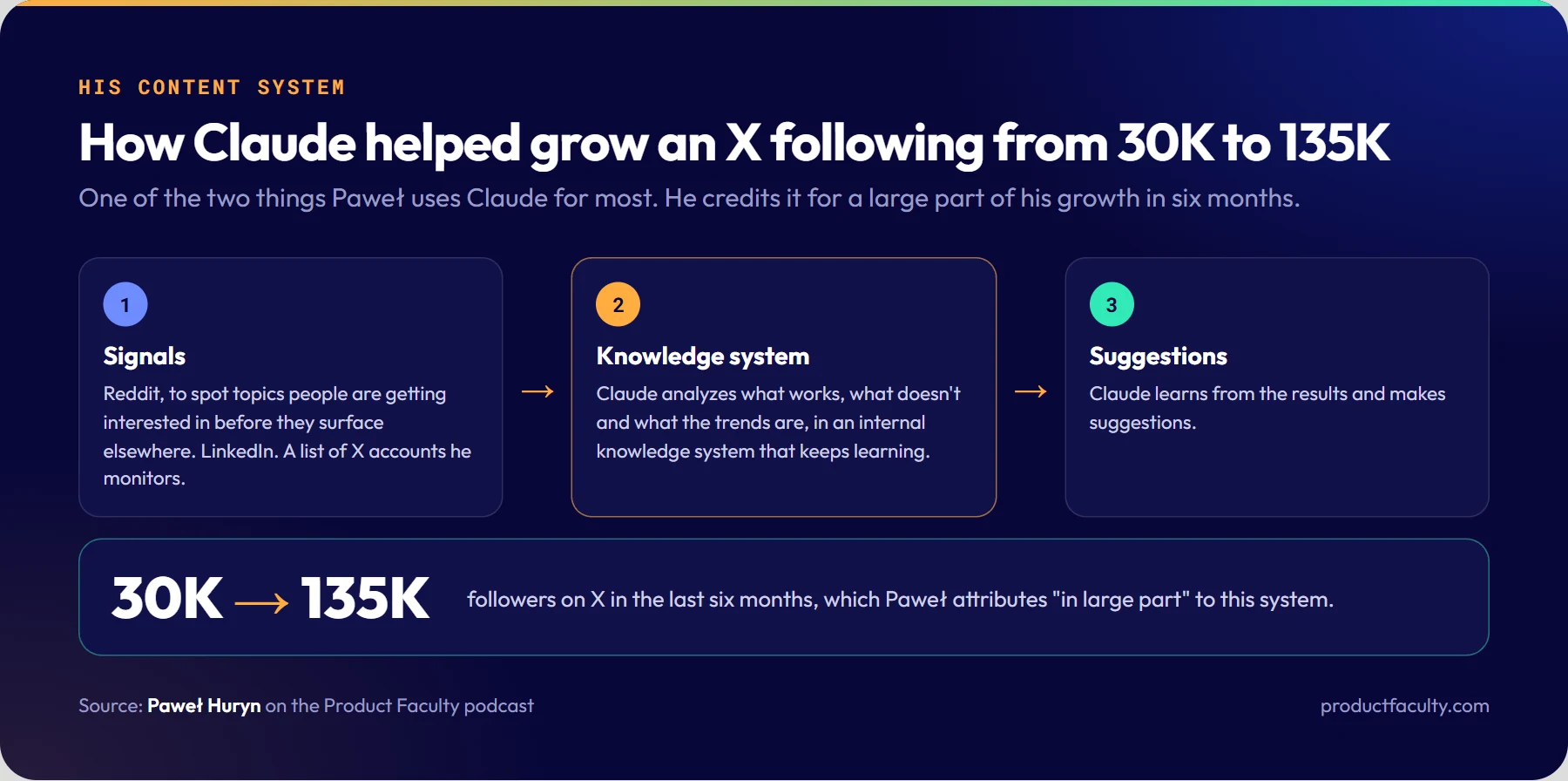
In an internal knowledge system, Claude analyzes what works, what doesn't and what the trends are, then learns and makes suggestions. The result he can measure: in the last six months, he went from 30,000 followers on X to 135,000.
Shipping products: 180,000 installs
Paweł experiments with a lot of apps: "I just build them and ship and see whether it works or not." The biggest so far is AFK Pilot, an interface for coding agents, some of which don't have a native interface of their own, like Grok Build. It runs the agents' original harnesses inside his custom interface.
- It comes as an extension for VS Code, Cursor and Antigravity.
- People can also run it as a desktop app and use his website to control their agents remotely.
- It has reached 180,000 installs.
He has also built a live Q&A app and his own app-monitoring tools, partly to get rid of subscriptions he was paying for.
Lovable or Claude Code?
Moe asked why people still use app builders like Lovable or Base44. Paweł understands the appeal: they handled the whole life cycle, from building to releasing, at a time when that wasn't easy to do yourself. But now, he says, it's much cheaper and better to do it directly in Claude Code, Codex or a similar tool.
- Cost. In his experience, building something simple in Lovable took $200 to $300 a month. For the same money in Claude Code, you can build a few production systems, not just a prototype.
- Production. Once you move past prototyping, Lovable isn't really good at managing branches, multiple environments or separating development from production. "It's just not there."
Moe's view: people still using Lovable often haven't tried the exact same prompt in Claude Code, which does the same thing, or probably better.
Advice for beginners: ask the agent
Paweł's key advice may sound strange to heavy AI users, but many people haven't realized it yet: if you don't know how to do something with agents, ask the agent. Don't go looking for the answer somewhere else.
- Want to install a skill? Ask the agent.
- Want to connect to an app? Don't search for how to connect MCP, or the difference between MCP and an API. Just ask in the chat.
"You can solve 99% of your problems just by asking in the chat. Don't be afraid that you make a mistake. That's how we learn."
Paweł Huryn
Watch the full episode
FAQ
How do you run multiple Claude Code agents in parallel?
Paweł Huryn runs five to six by delegating outcomes, not steps: he gives each agent the goals, the desired outcomes and how success will be measured, plus guidelines, then trusts it to work. He tracks them through artifact boards instead of reading every chat.
Do you need the terminal to use Claude Code?
No. The Code tab in the Claude desktop app now lets you do what you could do in the terminal or VS Code, including viewing files, managing and tracking changes, and installing skills and connectors for a single project.
What is a flight deck for AI agents?
It's Paweł Huryn's name for artifacts his agents keep with simple progress: last steps, what's in flight, what's next and open decisions. He answers decisions in the artifact, and the agent reads them between turns.
How long can Claude agents work on their own?
Paweł says his agents often work 12, 18, 24 or more hours autonomously without him answering anything. If an agent is blocked, it sends him a Telegram notification.
Are AI artifacts replacing prototypes?
Not fully. Artifacts are great for understanding a goal, reviewing an agent's work and aligning a team, but they can't be instrumented. To learn how users behave, build the real product, deploy it and watch how people use it.
Is Claude Code better than Lovable?
In Paweł Huryn's experience, building something simple in Lovable cost $200 to $300 a month, while the same money in Claude Code can build a few production systems. He also found Lovable weak at branches, multiple environments and separating development from production.
Learn to build with Claude
Paweł teaches AI-Native PM with Claude at Product Faculty, where you go deep on building with Claude. To build and run agents of your own, see Agentic Engineering, or join the AI Builder Fellowship.