6 AI Skills Every Product Manager Needs: Lessons From Glean's Head of Product
When shipping a feature is nearly free, what's left for product leaders? Emrecan Dogan, Head of Product at Glean, breaks down context engineering, systems thinking, token yield, architecture, model orchestration and the discipline it takes to put agents into production.
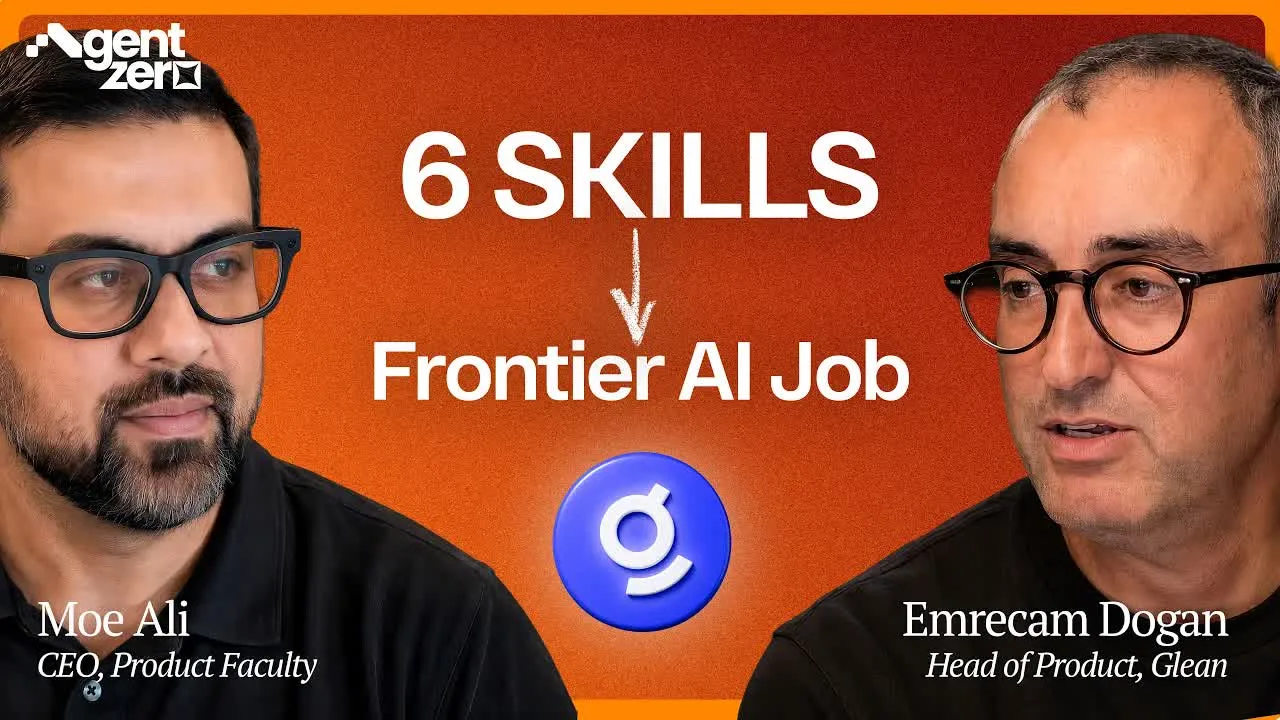
The 6 AI skills every product manager needs
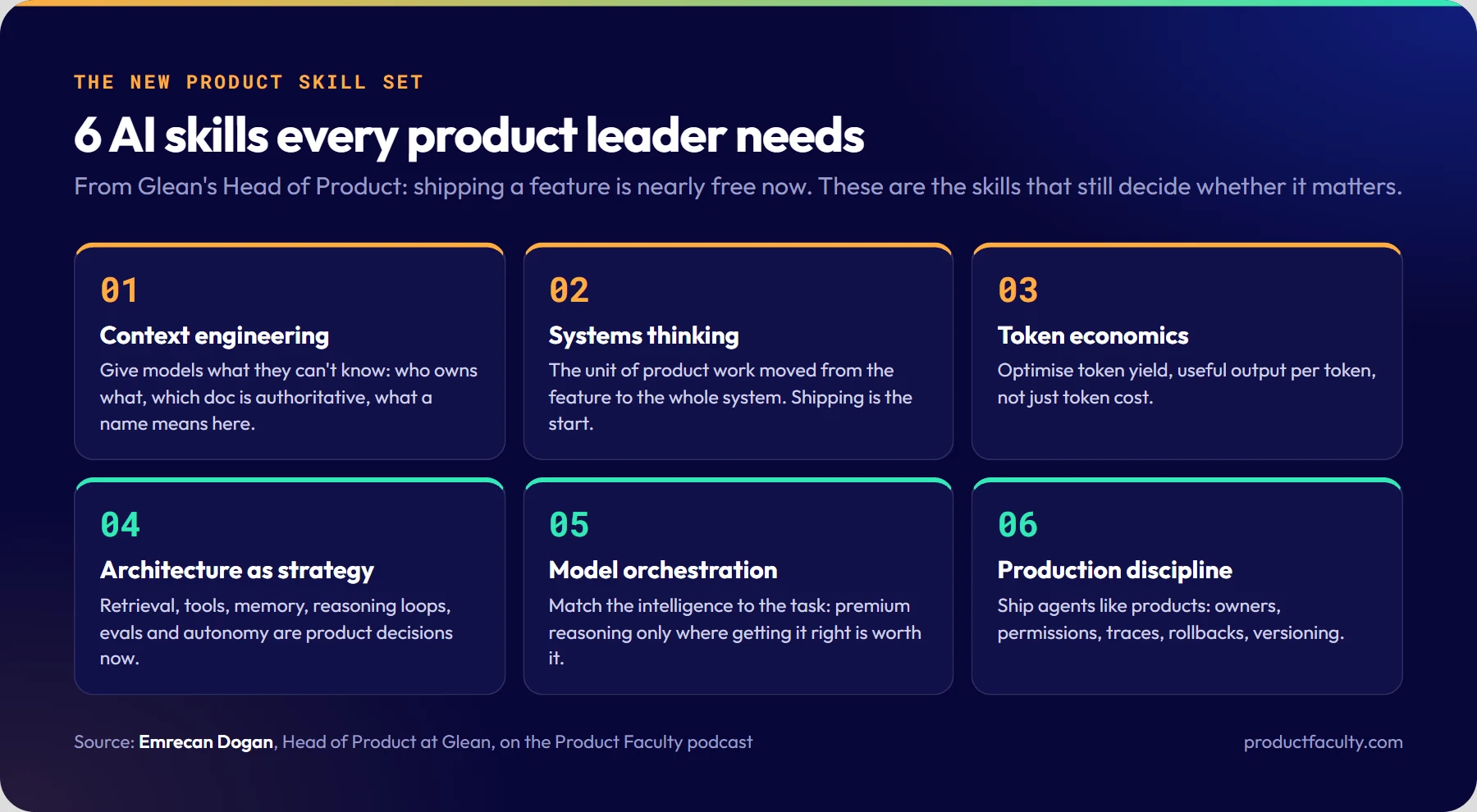
The six AI skills product managers need now are context engineering, systems thinking, token economics, architecture as product strategy, model orchestration and production discipline for agents. Together they decide whether cheap-to-ship AI features actually create value.
Emrecan Dogan leads product at Glean, the enterprise AI platform. He runs everything in R&D outside engineering: product, data, design, operations and partnerships. Before Glean he founded an education technology company, raised from Sequoia and Khosla, ran it for six years and sold it to LinkedIn. He is also, he says, one of Glean's heaviest users.
"Shipping only starts the journey for a product team or a product manager. It is by no means the end."
Emrecan Dogan
The episode in numbers
1. Context engineering: models don't know your organization
Frontier models know the public internet remarkably well. What they don't know is your company: which documents are authoritative, who owns a project, who has the most influence over a decision or a veto, what an acronym means, or whether Databricks is your customer, vendor or partner.
Emrecan argues that's exactly where the value is. A company's edge, its "organizational alpha", is the knowledge that goes beyond consensus: the non-obvious, sometimes contrarian ways it decides and executes. Models already have the consensus. "Whoever wins that context game ... they get to create that additional value on top of the model intelligence."
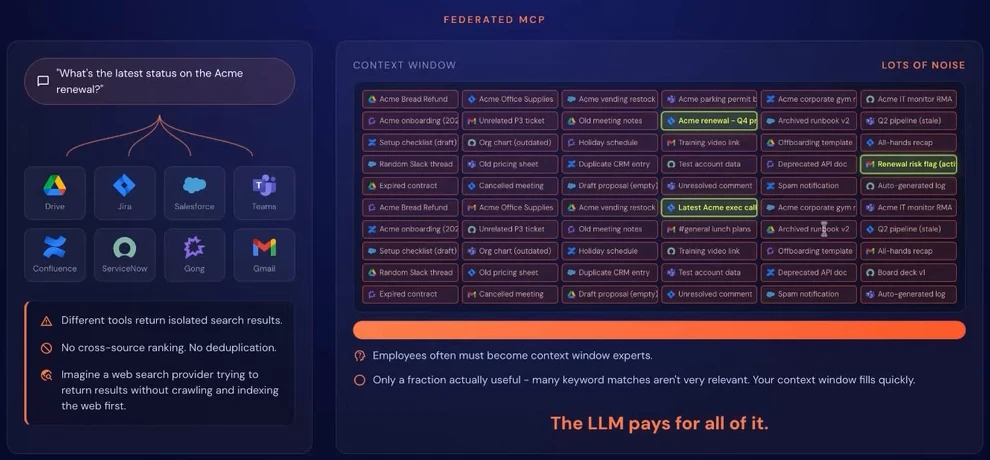
Many teams try to get there by plugging an AI assistant into a dozen MCP connections: Drive, Jira, Salesforce, Teams, Gmail. Emrecan calls that a mild yes with a lot of nuance. Each tool runs its own keyword search, the model waits for all of them, then sorts through a flood of results, much of it irrelevant.
An index plus a knowledge graph works the other way round. The system already knows what's relevant, authoritative and fresh before anyone asks, and passes the model only that. Answers come back near-instantly with permissions enforced, using far fewer tokens.
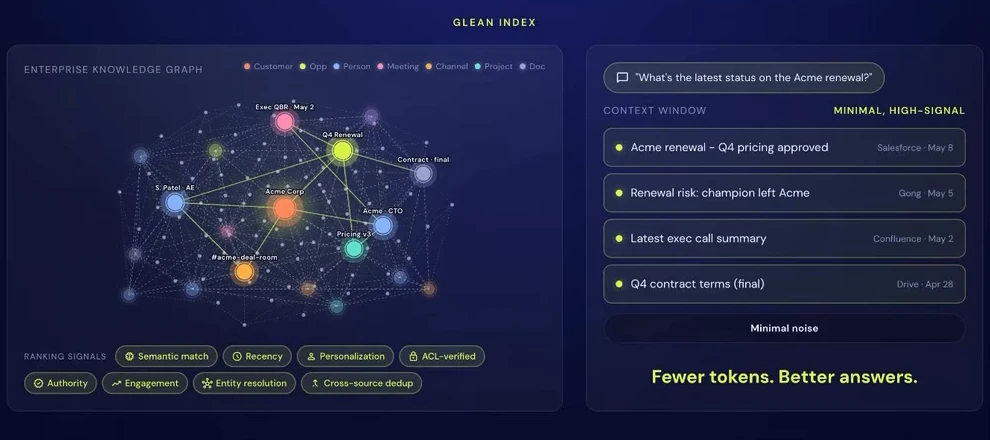
The graph also learns who the real experts are, without anyone declaring it. It watches whose opinion gets asked for, who makes or vetoes calls in a product review, and which deck gets presented to customers. Inside Glean's own 1,400-person company, it tracks about 10,000 topics. Emrecan says this only works because Glean spent years on permissions and indexing before generative AI arrived. "If you were trying to compress all this security and technology development within months, it would be impossible."
2. Systems thinking: the unit of product work is the system
AI has made features cheap. Prototypes appear in hours and real capabilities ship in weeks. As an industrial engineer, Emrecan looks for the bottleneck, and when features get cheap, the bottleneck moves to the boundaries between features: between surfaces, workflows and journeys under the same product.
AI is great at the first part: the prototype, the proof of concept, something that looks compelling. But a PM lives in the later part, where it becomes a product people adopt. Glean's frame for this is "we ship to start." The long part of the journey is integration-heavy and human: fitting the capability into real journeys, handling edge cases, building the right mental model, earning trust, getting people to discover and adopt it, and keeping the whole experience coherent.
Without this, teams fall into a zero-sum trap: "You ship something and some other aspect of the system goes down." Features ship, but active users, sessions and overall value don't move. System design used to be optional for PMs. Emrecan says it is now indispensable.
3. Token economics: optimise for token yield
For 30 years, software ran on fixed costs: you paid per seat, and one more query cost almost nothing. AI agents run on marginal cost. They search repeatedly, read long documents, call tools, retry failures and invoke expensive reasoning models, so a cheap chat answer can become a surprisingly expensive workflow across thousands of employees.
Many leaders respond by watching token cost alone. Emrecan says that's the wrong metric. "Even when the token cost is low, still a cheap wrong answer creates rework and has no enterprise value." What matters is token yield: useful, work-ready output per token consumed.
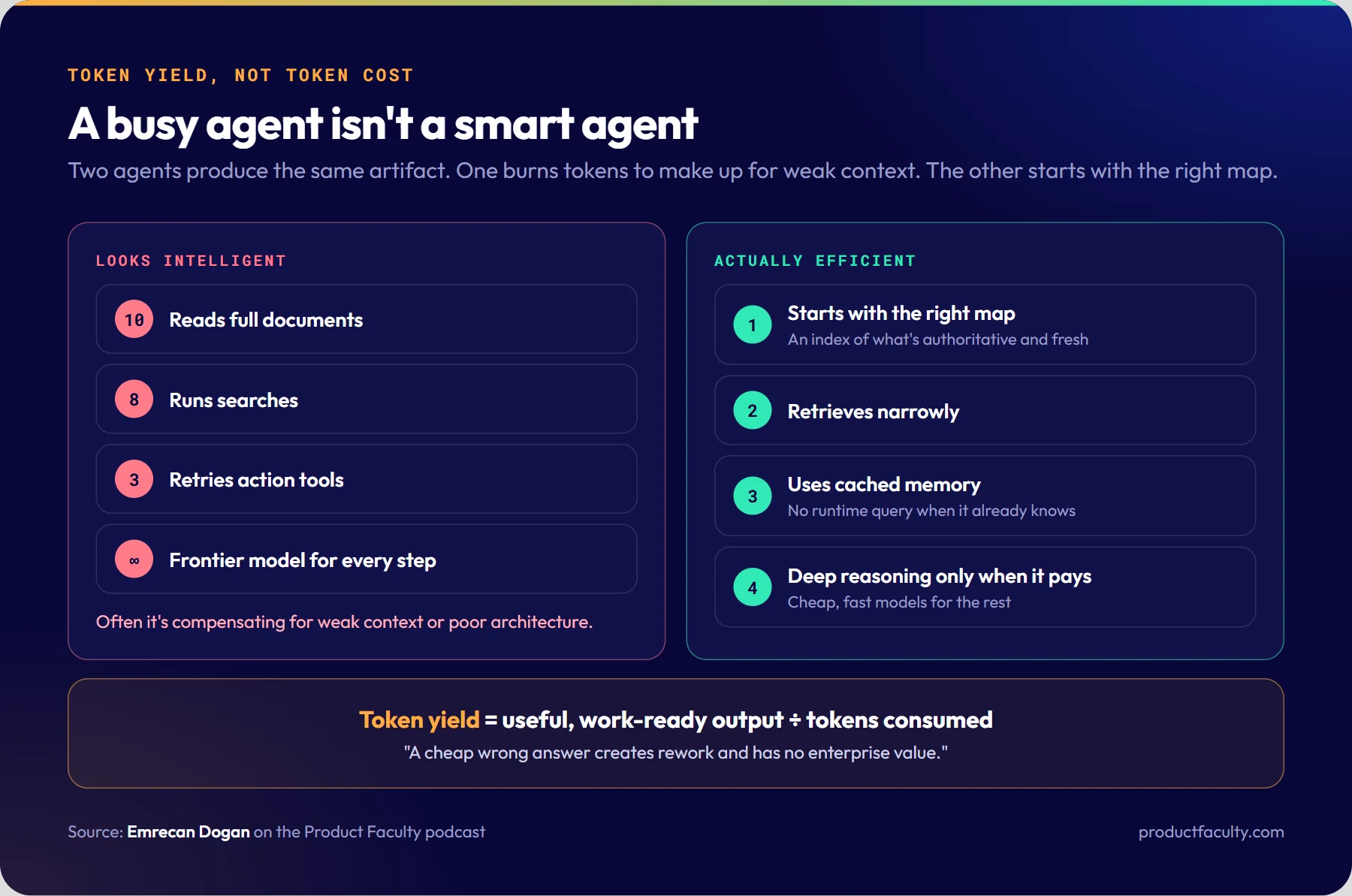
There's a practical way to raise yield even with tools like Codex or Claude Code: instead of connecting each one to ten token-hungry MCP servers, connect it to one unified context server that does the ranking first. Emrecan says this is one of Glean's fastest-growing products, because customers want to use different AI tools in different departments without paying for the same noise in each.
4. Architecture as product strategy
When ChatGPT arrived, the problem was hallucination, and retrieval (RAG) became the first architecture decision PMs cared about. Grounding led to the next skill: evals, because a product behaves very differently with a real customer than in lab conditions. Now, Emrecan says, architecture decides both a system's judgment and how much autonomy it can safely have.
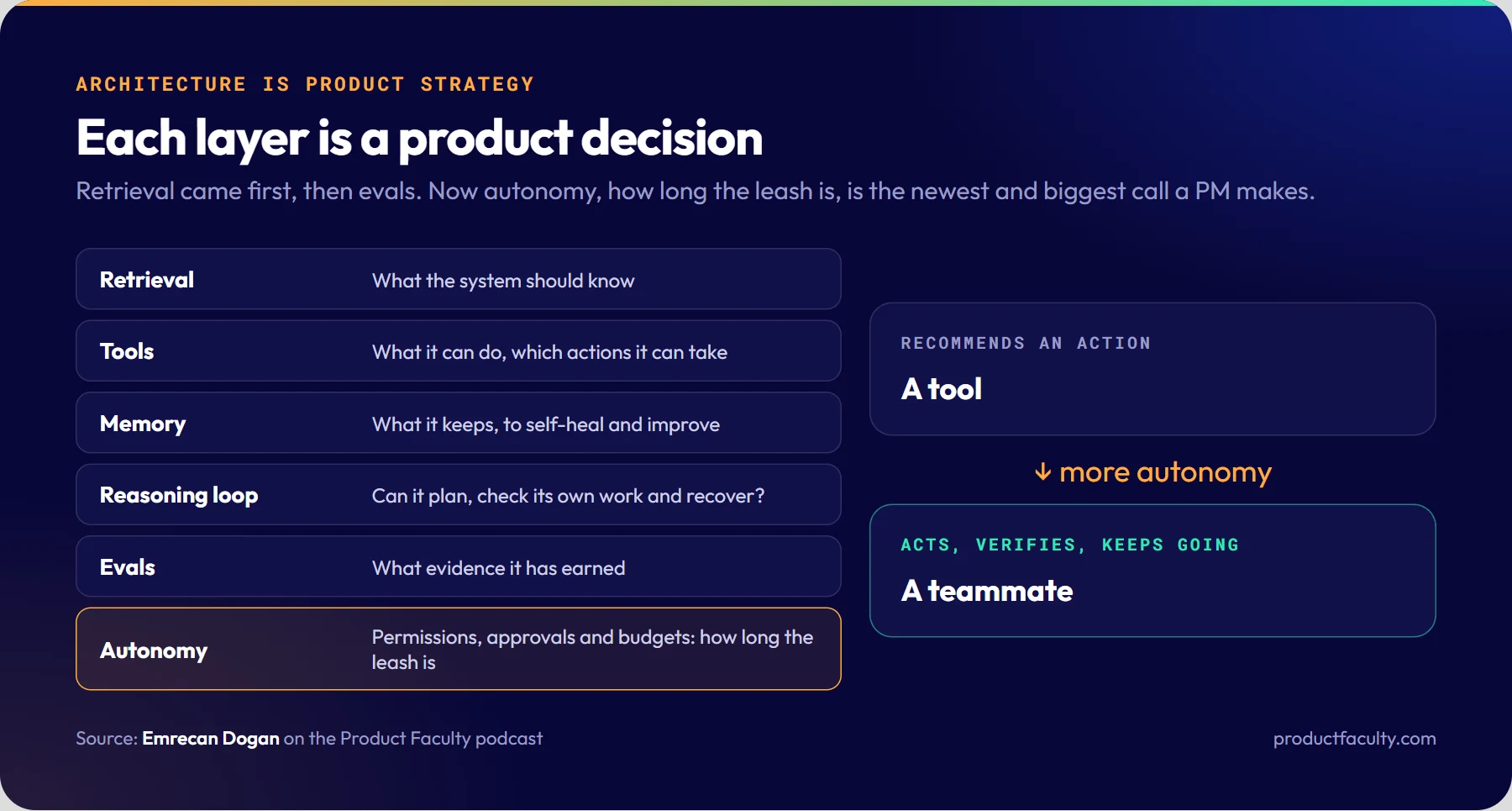
He calls autonomy the most important emerging decision. "Think of a system that recommends an action. That system is a tool. Think of a system that can take an action, verify the result and continue working. That system is beginning to behave like a teammate." The PM now has to decide which decisions the system may make, in which context, with what limits and guardrails.
5. Model orchestration: match the intelligence to the task
Not every question deserves the most expensive model. In Glean's "auto" mode, users don't pick a model. Glean decides, millions of times a day, whether a query needs premium reasoning or a fast, cheaper model, based on how much getting it exactly right is worth.
The context makes this possible. Because the system knows your role, your projects and your priorities from how you work (which emails you answer first, what you focus on), it can tell the difference between something you need to nail and something you just need to check off. As the host points out, model providers have little incentive to stop you from "token maxing"; the product has to make that call for you.
6. Production discipline for agents
Emrecan compares an agent's journey to a feature's journey to product-market fit. A demo only has to work once. A production agent has to work 100,000 times inside your guardrails, and the operational discipline is the same as taking any product from idea to wide adoption.
| Feature | Agent demo | Production agent |
|---|---|---|
| Has to work | Once, on stage | Every time, at scale, inside guardrails |
| Ownership | Whoever built it | A clear owner and its own identity |
| Access | Whatever the builder had | Set permissions and an approval model |
| When it fails | You try again | Traces, error policies and a rollback path |
| Changes | Edited in place | Versioned and backwards compatible, so users aren't surprised |
| Autonomy | Not thought through | Designed, limited and watched, with a way to course-correct |
The big difference from ordinary features is autonomy. Conventional features don't act on their own. Agents do, so the PM must anticipate, guardrail and correct their behaviour once they're in production.
How to build a moat when the model isn't yours
Even with a strong position, Emrecan says Glean has to "re-earn the trust" every day. A conceptual moat only matters if it turns into better, faster, cheaper answers for users. That's why Glean even makes other AI tools better with its context: it earns the right to handle a customer's entire context.
For other leaders, he sees three kinds of moat:
- Network effects, the strongest, though few AI companies have found them yet.
- UX gravity: users keep coming back because they've built habits around your product, and you use that to pick better models, cut costs and predict what they need.
- Data gravity: everything users do makes the system better, cheaper or faster, especially the knowledge they never write down.
What's next: from reactive to proactive AI
Today the burden is on people: you have to remember which AI tool, agent or prompt to use, and when. As every company ships hundreds of AI features, that burden grows. Emrecan thinks the real revolution is proactive AI. If you have an interview tomorrow, the AI notices, prepares questions in your style and puts a prep doc on your calendar half an hour before, without being asked.
His advice to PMs worried that AI is "eating" their job is to lean into system design. Cheaper code doesn't automatically mean better products. "No AI in my mind will be able to produce the judgment and taste." The PM's edge is understanding the whole system and how a user notices, adopts and makes a feature part of their daily habit.
Try this week
- List what your AI doesn't know about your company: authoritative docs, owners, decision-makers, internal names.
- Pick one shipped feature and check whether it moved a system metric, like active users or sessions, or just took usage from another feature.
- Measure token yield on one AI workflow: how much of its output is used without rework?
- Count your MCP connections per AI tool, and look for ones that duplicate the same search.
- Write down one agent's autonomy envelope: what it may decide alone, what needs approval and its budget.
Watch the full episode
FAQ
What AI skills do product managers need?
Six skills stand out: context engineering, systems thinking, token economics, architecture as product strategy, model orchestration and production discipline for agents. Together they decide whether AI features that are now cheap to ship actually create value for users and the business.
What is context engineering?
Context engineering is giving AI models the organization-specific knowledge they can't learn from the internet, such as which documents are authoritative, who owns a project, who makes decisions and what internal names mean. Good context lets a model give better answers with fewer tokens.
What is token yield?
Token yield is the amount of useful, work-ready output an AI system produces per token it consumes. Emrecan Dogan argues it matters more than token cost alone, because a cheap wrong answer still creates rework and has no value.
Is an index better than connecting many MCP servers?
For enterprise questions, an index with a knowledge graph ranks what is relevant, authoritative and fresh before the model sees it, so answers are faster and use fewer tokens. Connecting many separate MCP servers sends keyword searches to each tool and fills the context window with noise.
What is the autonomy envelope for AI agents?
It is the set of permissions, approvals and budgets that decide how much an agent may do on its own. A system that only recommends actions is a tool; one that can act, verify the result and keep working behaves like a teammate, so the PM must design its limits carefully.
Will AI replace product managers?
Emrecan Dogan argues the opposite: as shipping features gets cheaper, the bottleneck moves to the system as a whole. Judgment, taste and system design, deciding how features fit together and get adopted, become more important for product managers, not less.
Build these skills
Product Faculty's AI Product Management course teaches the skills in this episode with practitioners from frontier AI companies. For senior leaders shaping AI strategy, see AI Product Strategy for Leaders. To measure AI quality before you scale, take AI Evals.